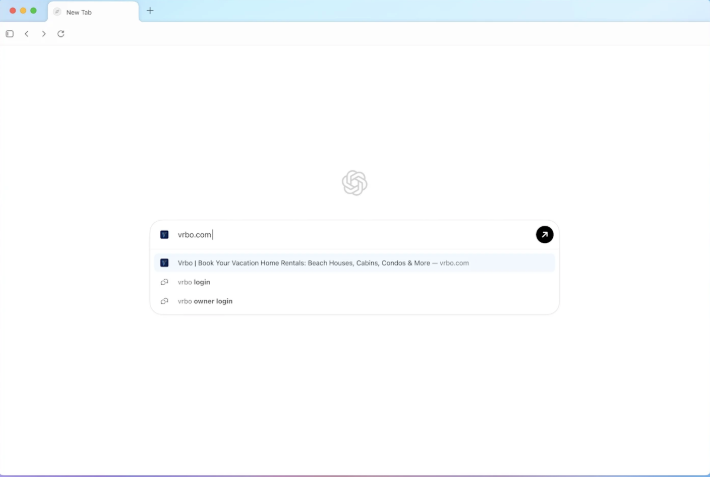
The battle for the internet’s gateway has reached a fever pitch. OpenAI, the company behind the generative AI phenomenon ChatGPT, has officially launched its dedicated web browser: ChatGPT Atlas. This move is a direct escalation against established market leaders, particularly Google Chrome, and immediately sent tremors through the digital marketing world, with Google’s stock reportedly tumbling 3% following the announcement.
The new browser, currently available on macOS 14.2 or later, with Windows and mobile versions expected soon, is not just a browsing tool; it’s an integrated AI companion. At its core is a persistent ChatGPT sidebar that allows users to summarize content, analyze code, or complete tasks on the fly without ever leaving the webpage. Its most disruptive feature is Agent Mode (available for Plus and Pro users), which allows the AI to autonomously execute complex, multi-step tasks—like booking a flight or compiling a research paper—directly within the browser.
Watch the video:
For years, the multi-billion dollar Search Engine Optimization (SEO) industry revolved around one goal: driving users to click a link to a website. Atlas fundamentally challenges this model.
The key shift is from a “list of links” to a “single, synthesized answer.” Generative AI models already answer questions so effectively that one recent study indicated as many as 58% of Google searches now end without any click at all. Atlas capitalizes on this behavioral change, prioritizing the AI-generated answer above traditional results.
This signals the immediate arrival of Generative Engine Optimization (GEO), where the goal is no longer to rank #1 on a Search Engine Results Page (SERP), but to have your content chosen as the sole, authoritative source cited by the AI.
Read our previous posts related to this:
The launch of Atlas forces digital marketers to overhaul their strategy, focusing on three critical areas to ensure content visibility:
Ironically, reports suggest that OpenAI built Atlas on Google’s open-source Chromium engine, using the foundational code of its biggest rival to launch a market-disrupting product. With Perplexity also launching its Comet AI browser earlier this year, the competition to redefine web navigation is just beginning. The future of online discovery now rests not on who has the best website, but whose content the AI trusts the most.