How to Get Found by ChatGPT: A Small Business Owner’s Guide
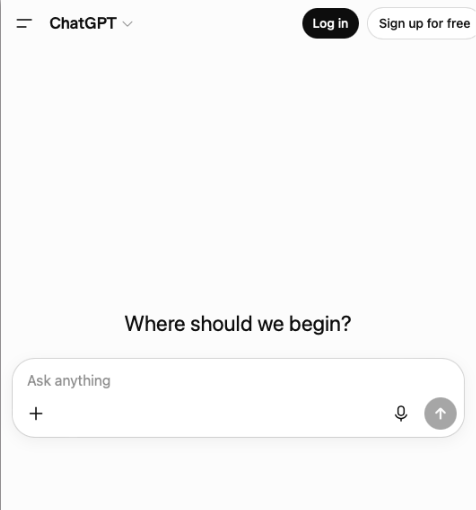
Try this right now: open ChatGPT and ask it a question a real customer would ask about your industry without saying your business name. Something like “who does [what you do] in [where you’re located]?”
Did your name come up? For most small business owners, the honest answer is no. Not because the business isn’t good but because nothing about the website was ever built to be readable by an AI.
Here’s the good news: getting found by ChatGPT isn’t a mystery, and it doesn’t require a developer or a huge budget. It comes down to a handful of concrete fixes. Here’s exactly where to start.
Why ChatGPT can’t find you yet (probably)
AI tools like ChatGPT don’t “search” your website the way a person browsing does. When they answer a question, they’re drawing on a mix of what they were trained on and, increasingly, real-time web content, and they lean hard on sources that are clear, well-structured, and easy to verify.
Most small business websites fail on all three counts, not because the business isn’t legitimate, but because the website was built to look good, not to explain itself clearly to a machine reading it cold.
Step 1: Answer the exact questions your customers ask in plain language
Go back to basics. What does someone actually type or say when they need what you offer? Not “premium solutions for your business needs” real, specific questions:
- “How much does [your service] cost?”
- “Is [your service] available in [your city]?”
- “What’s the difference between [you] and [a common alternative]?”
Write a page, section, or blog post that answers each one directly, in the first sentence or two, not buried under three paragraphs of brand story. AI tools pull the clearest, most direct answer they can find. Make yours the easiest one to lift.
Step 2: Make it obvious who you are and why you’re credible
An AI model is more confident recommending a business it can quickly verify. That means your site needs to clearly state, in plain text (not just a logo or a slogan):
- Who founded or runs the business, with a real name and bio
- How long you’ve been operating
- What makes you qualified to do what you do (credentials, experience, notable clients)
- How to actually reach you: phone, email, physical location if relevant
If this information is missing or vague, you’re not untrustworthy. You’re just invisible to a system that can’t confirm you exist.
Step 3: Structure your content so it’s easy to lift
AI tools extract facts more easily from content that’s already organized. Before you publish anything new (or go back and fix what’s live):
- Use real headings (H2s, H3s) instead of just bold text
- Break up dense paragraphs with bullet points and short lists
- Add a clear FAQ section to key pages, with the question as the heading and a direct, short answer underneath
- Keep answers to 1–3 sentences before you add nuance or detail
This is also exactly the kind of structure that helps human readers and screen readers. It’s not a special “AI trick,” it’s just clearer writing.
Step 4: Keep your information consistent everywhere
If your business name, location, or description is slightly different on your website, Google Business Profile, Facebook page, and any directory listings, that inconsistency makes an AI model less confident about which version is accurate so it may just leave you out rather than guess wrong.
Do a quick pass across every platform you’re listed on and make sure your name, address, phone number, and one-line description match, word for word where possible.
Step 5: Fix what’s stopping AI (and everyone else) from reading your site properly
If your site is slow, poorly coded, or inaccessible to screen readers, it’s often just as hard for an AI crawler to parse cleanly, which means all the work above never even gets read. This is the technical foundation underneath everything else, and it’s usually the fastest thing to audit and the easiest to fix once you know exactly what’s broken.
Step 6: Test it, then fix the gap
Go back to that first test. Ask the same question again after you’ve made changes. Ask a follow-up: “Why did you (or didn’t you) recommend [your business]?” AI tools will often tell you plainly what’s missing. Treat that answer as your next to-do list.
The bottom line
Getting found by ChatGPT isn’t a separate skill from running a trustworthy business. It’s making the trustworthy, expert, specific things you already do legible to a machine that’s reading your site cold. Clear answers, real credibility signals, consistent information, and a site that’s technically easy to read. That’s it.
Not sure where you actually stand? Get your free GEO Audit and see your AI visibility score plus a plain-English list of exactly what to fix first or grab the free Get-Found-By-ChatGPT Checklist and work through it yourself.
- What Is Generative Engine Optimization (GEO)? A Plain-English Guide for Small Business Owners
- Everything You Need to Know About Meta One: Features, Pitfalls, and ROI
- How to Get Found by ChatGPT: A Small Business Owner’s Guide
- How to Automate Facebook Messenger: Hand Off Hot Leads & Sync Orders to Google Sheets
- Can AI Shortcuts Save Your Marketing Strategy?
Frequently Asked Questions
Can I really get found by ChatGPT without hiring an agency? Yes. Everything in this guide: clearer answers, credibility signals, structure, consistency is something a business owner can do themselves. An audit just tells you which of these matters most for your specific site, so you’re not guessing where to start.
How is this different from regular SEO? Regular SEO focuses on ranking in a list of links. Getting found by ChatGPT (sometimes called GEO or AEO) focuses on being clear and credible enough that an AI tool quotes or recommends you directly inside its answer, sometimes without the user ever clicking a link at all.
How long does it take to see results? There’s no fixed timeline, since AI tools update differently than traditional search engines. What’s consistent is that the businesses with clear, well-structured, verifiable content tend to show up sooner than those that don’t, so the sooner you fix the gaps, the sooner you’re eligible to be recommended.
Do I need to add anything special to my website’s code? Not necessarily. The biggest wins usually come from content and clarity, not code. Structured data (like FAQ schema) can help, but it supports good content, it doesn’t replace it.
Lorna Bondoc is the Founder of YOVEO Digital, a women-led digital marketing agency based in Cebu City, Philippines. For more than a decade, she’s helped small business owners across the Philippines, the Pacific Islands, Australia, and New Zealand build websites and marketing systems that actually work without the jargon or bloated retainers. Lorna is a vocal advocate for accessible, inclusive web design, leading YOVEO’s Bridging the Gaps program to close the digital divide for women-owned and underserved MSMEs across the Asia-Pacific.