Part 3 of 3: The Human-Centric Design WCAG 2.2
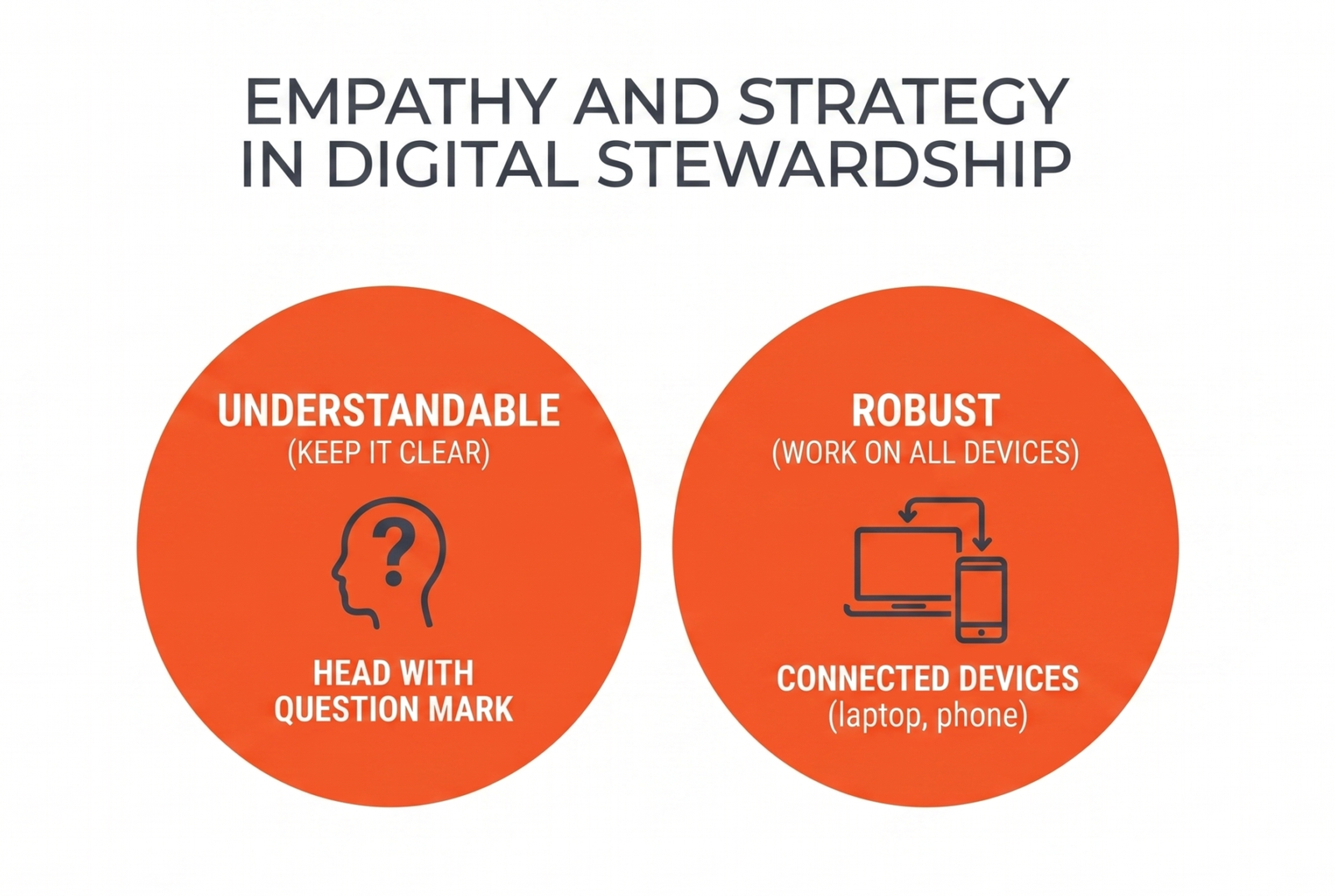
The latest update to web standards, WCAG 2.2, is a reflection of the human-centric design shift in digital spaces. It moves away from rigid technicalities and toward the lived experience of the user—specifically those with cognitive challenges and those operating in mobile-first environments.
As leaders, we must view these updates not as chores, but as opportunities to reduce friction in a noisy world.
1. Spatial Respect: The Target Size
The frustration of a “mis-click” on a tiny mobile button is a universal experience. For someone with motor impairments, it is a barrier to entry.
- The Leadership Insight: Respecting “Target Size” (at least 24×24 pixels) is an exercise in spatial empathy. It recognizes that our users are often distracted, on the move, or using small screens.
2. Cognitive Conservation in Human-centric Design
Asking a user to type the same information twice is an unnecessary tax on their attention. For those with memory or learning disabilities, it is a significant hurdle.
- The Leadership Insight: We must conserve our user’s mental energy. By ensuring the site “remembers” previously provided data, we honor their time and reduce the “form fatigue” that kills digital momentum.
3. Visual Certainty in Human-centric Design
A “You Are Here” sign is essential for any map. On a website, that sign is the “focus indicator” for keyboard users.
- The Leadership Insight: Visual certainty is a cornerstone of digital safety. When a user can clearly see where they are on your page, they feel in control of their experience.
4. Inclusive Security: Accessible Authentication
Security should protect, not exclude. Relying on “cognitive puzzles”—like solving math problems or identifying traffic lights—to verify a user creates unnecessary walls.
- The Leadership Insight: We must move toward security methods that don’t rely on “tests.” Magic links, biometrics, and simple copy-paste fields are the future of secure, inclusive access.
The Bottom Line: Digital accessibility is a journey of continuous care. Adopting these WCAG 2.2 standards help us bridge the technology gap and ensure our corner of the internet is a space of belonging for all.
Read our latest posts:
- Claude’s Invisible Watermark Changes How Marketers Create Content
- What Is Generative Engine Optimization (GEO)? A Plain-English Guide for Small Business Owners
- Everything You Need to Know About Meta One: Features, Pitfalls, and ROI
- How to Get Found by ChatGPT: A Small Business Owner’s Guide
- How to Automate Facebook Messenger: Hand Off Hot Leads & Sync Orders to Google Sheets